J&J Fernandez Roofing is proud to serve as a trusted roofing and exterior home services provider across Suffolk and Nassau County, bringing over 15 years of local experience to every project. For homeowners in Long Island communities, protecting your investment from the coastal weather is a top priority. Among the many critical components of your home’s defense system, the integration of your roof’s drip edge with your gutters plays a surprisingly vital role that is often overlooked until damage occurs.
Your roof is a complex system designed to shed water efficiently. While shingles and gutters get most of the attention, the metal flashing installed along the roof’s edges, known as the drip edge, is what guides that water safely off your roof and into your gutters. When this component is missing, incorrectly installed, or fails, it can undermine the entire roofing system, leading to preventable and costly issues for your Suffolk County home.
The consequences of a failed or missing drip edge are not always immediate, but they are almost always destructive. Water can wick back under your shingles, soaking the roof deck and leading to rot. It can run behind your gutters, causing fascia boards to deteriorate and paint to peel. Over time, this persistent moisture can even threaten your home’s siding, insulation, and interior walls. For a region like Long Island that experiences nor’easters, heavy rains, and winter ice, ensuring this first line of defense is secure is non-negotiable.
Understanding the function and importance of a properly installed drip edge is the first step in proactive home maintenance.
This blog will explain what a drip edge is, why its integration with your gutter system is critical, the signs that yours may be failing, and the benefits of professional installation. By the end, you’ll see why this unsung hero of your roofline is key to safeguarding your home’s structural integrity and curb appeal for years to come.
What Exactly is a Drip Edge?
A drip edge is a specialized type of metal flashing, typically shaped like an “L,” that is installed along the eaves and rakes (the edges) of your roof. Its primary job is to control the flow of water as it runs off your roof.
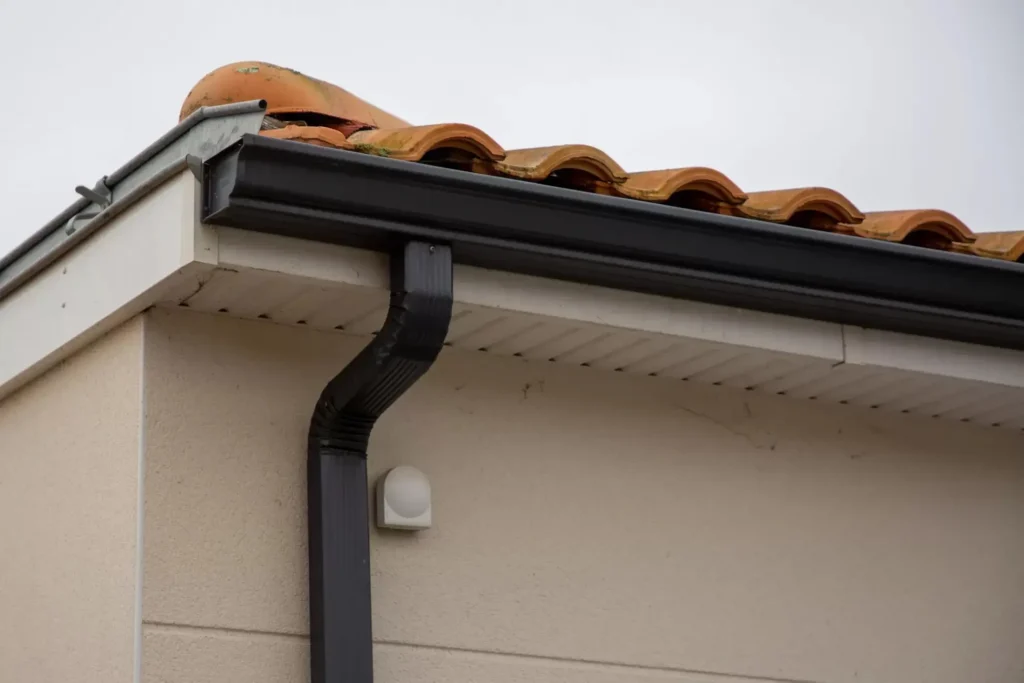
The design is intentional: one leg lies flat on the roof deck under the shingles, while the other leg extends downward and bends away from the fascia board. This bend is crucial, it creates a “drip” that ensures water is directed completely clear of your underlying woodwork and is released directly into your gutters, rather than clinging to the edge and seeping underneath.
The Critical Role of Drip Edges in Your Roofing System
Think of your roofing system as a team where every player has a specific role. The drip edge is a key defensive player. It provides essential protection for the most vulnerable parts of your roof structure, the fascia board and the roof deck edge. By channeling water away, it prevents persistent moisture that leads to wood rot, mold growth, and insect infestation. Furthermore, a properly installed drip edge acts as a wind-resistant barrier, helping to secure the first course of shingles against strong gusts common during Suffolk County storms. It also supports the roof’s underlayment, keeping it from sagging or pulling away at the edges.
How Drip Edges and Gutters Work Together
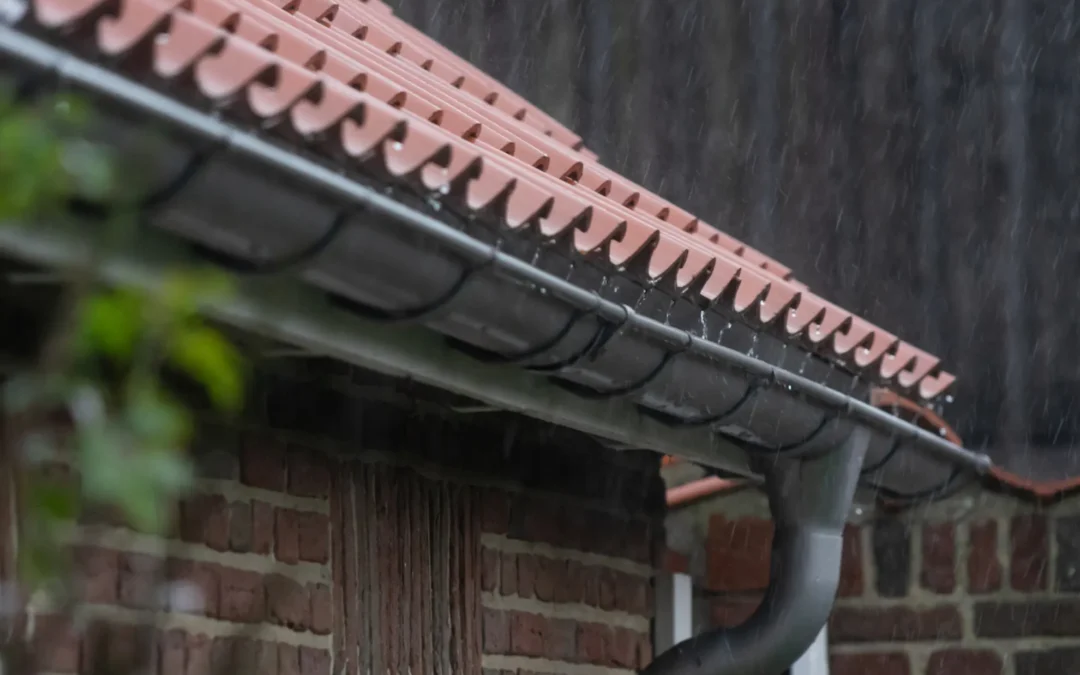
The relationship between your drip edge and your gutters is a partnership for efficient water management. The drip edge does not replace gutters; instead, it complements them. A correctly positioned drip edge will extend out over the gutter, allowing water to drip directly into the channel without touching the fascia.
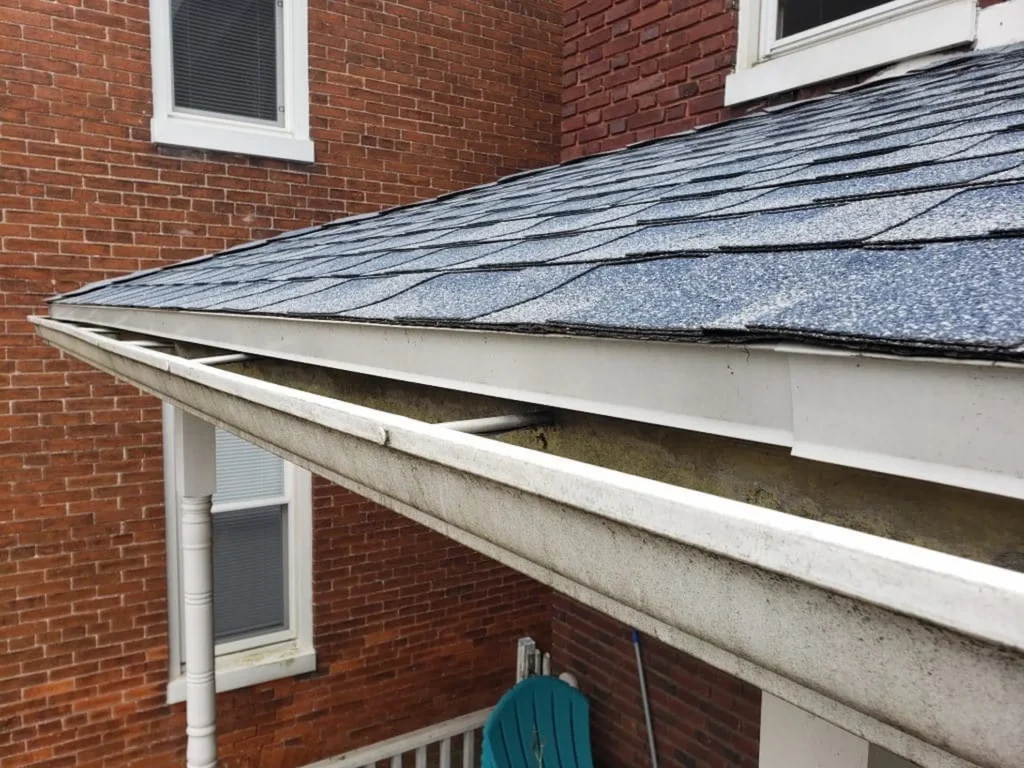
This seamless handoff is what prevents “overshoot” and “backsplash,” where water misses the gutter or splashes up behind it. When these two components are misaligned or one is failing, water is diverted from its intended path, leading to the very problems the system is meant to prevent, such as soil erosion around your foundation and water staining on your siding.
Common Signs Your Drip Edge Needs Attention
Homeowners can often spot early warning signs that their drip edge is compromised. Visually, look for rust, corrosion, or bends in the metal flashing along your roof’s edge. Peeling paint or visible rot on your fascia boards is a major red flag, indicating water is consistently hitting the wood.
During or after rain, check if water is dripping between the gutter and the fascia instead of flowing cleanly from the roof into the gutter. Inside your home, water stains in your attic or on exterior walls near the roofline can also point to a drip edge failure that is allowing water to infiltrate behind the siding or under the shingles.
The Consequences of a Missing or Faulty Installation
Ignoring a problematic drip edge can lead to a cascade of home maintenance issues. The most immediate damage is to the roof’s wooden structure, the fascia and soffit can rot, compromising their strength and requiring full replacement.
Persistent water intrusion can then damage the roof decking (the plywood under your shingles) and the roof rafters, leading to structurally significant and expensive repairs. This moisture also creates a perfect environment for mold and mildew in your attic, which can affect indoor air quality. Externally, water running behind gutters can stain and damage your home’s siding, and constant dripping can erode landscaping and soil near your foundation.
The Professional Installation Process
Installing or replacing a drip edge is a precision task best left to experienced professionals like the team at J&J Fernandez Roofing. The process is integrated into a broader roofing or gutter service. It begins with a careful removal of the first course of shingles along the eave to access the roof deck.
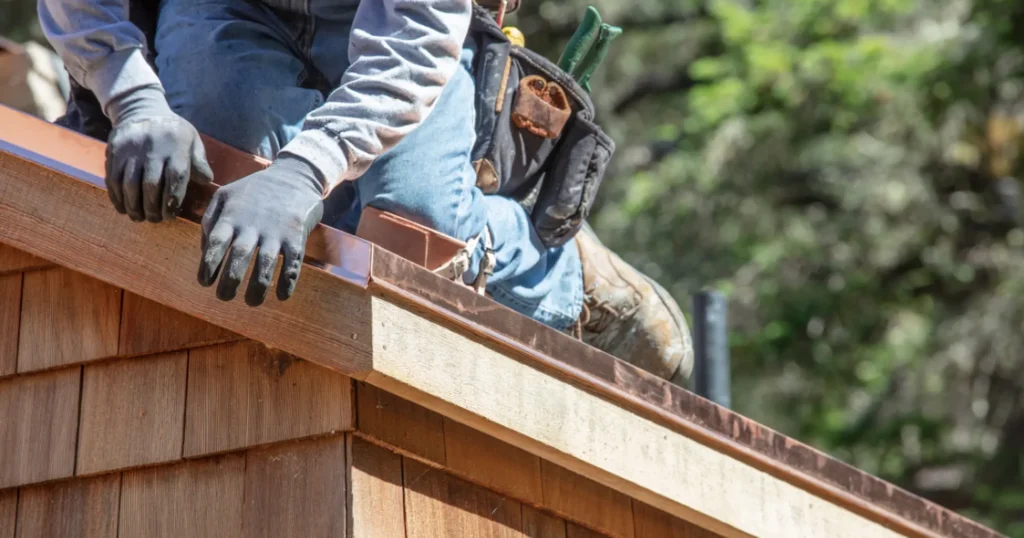
The old flashing is taken off, and the fascia board is inspected for any rot that needs repair. The new drip edge is then nailed securely to the roof deck, ensuring it overhangs the gutter correctly. Special attention is paid to corners and joints, which are sealed to prevent leaks. Finally, the underlayment is secured over the top flange of the drip edge, and the shingles are reinstalled on top, creating a layered, water-shedding barrier.
Material Choices for Longevity in Suffolk County
Choosing the right material for your drip edge is important for longevity, especially in a coastal environment. Galvanized steel is a common, cost-effective choice with good durability. Aluminum is highly popular due to its excellent resistance to rust and its lightweight nature, making it a great all-around option for Long Island homes.
For maximum durability and a premium finish, copper drip edges are sometimes used; they develop a distinctive patina over time and can last for decades. A professional roofer can advise on the best material that complements your existing roofing system and stands up to local weather conditions.
Why Drip Edge Installation is Not a DIY Project
While some home improvements are suitable for DIY, drip edge installation is not one of them. This work requires precise knowledge of roofing techniques, safety protocols for working at heights, and the proper tools to remove and reinstall shingles without damaging them.
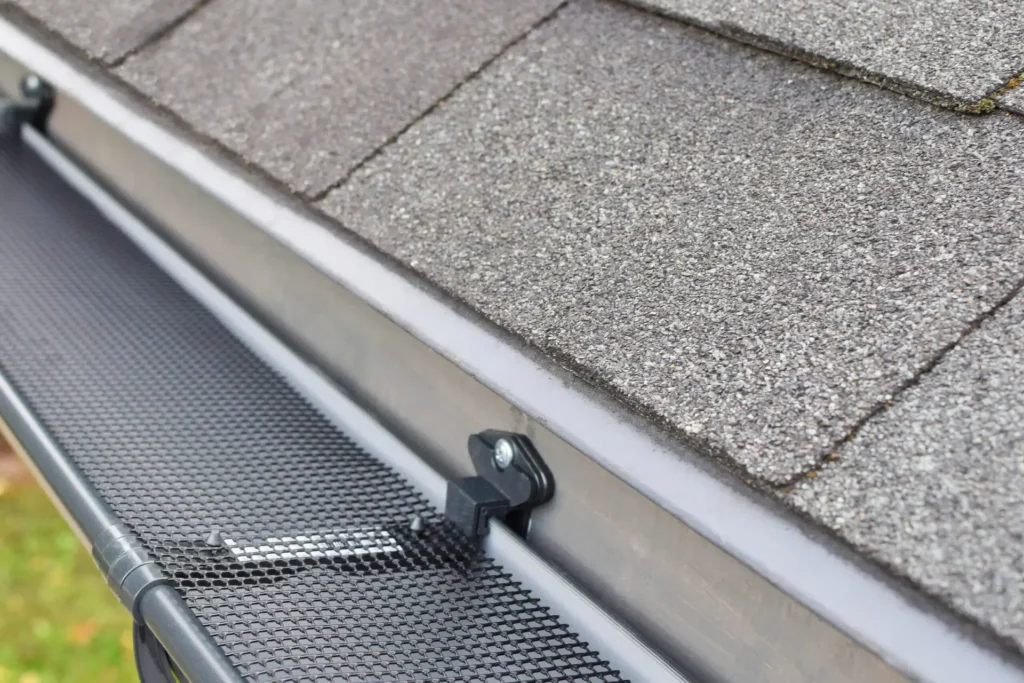
An improper installation, such as placing the drip edge over the underlayment instead of under it, or failing to secure it properly, can actually cause more water damage than having no drip edge at all. Professionals ensure the installation follows strict building codes and manufacturer specifications, which is essential for maintaining your roof’s warranty and your home’s insurance coverage.
Integrating Drip Edges with Other Roofing Services
A drip edge is one component of a healthy roofing system. Its installation and performance are deeply connected to other services. For instance, when getting a roof replacement or new roof installation, a new drip edge should always be included. It is also critical during roof repair for leaks along the eaves.
Furthermore, if you are investing in new siding installation, a faulty drip edge behind the old siding could be causing unseen damage to the wall structure. A full-service exterior company like J&J Fernandez Roofing examines how all these elements, roof, drip edge, gutters, and siding, work together to provide comprehensive protection for your home.
Why Choose J&J Fernandez Roofing for Your Drip Edge Installation
When it comes to protecting your Suffolk County home, you need a contractor with proven local expertise and a commitment to quality. J&J Fernandez Roofing stands out as a licensed and insured local roofing company dedicated to exceptional craftsmanship and honest communication.

With over 15 years of experience serving Babylon, Islip, Brookhaven, Smithtown, and all across Suffolk and Nassau County, their team understands the specific demands of Long Island’s climate. They use top-quality materials and follow a meticulous work process, from inspection and planning to professional installation and a final walkthrough, ensuring your drip edge is installed correctly to provide lasting protection and peace of mind.
Conclusion
Your home’s drip edge, though a small component, plays an enormous role in defending your property from water damage. By ensuring a seamless connection between your roof and gutters, it protects critical structural elements, preserves your home’s exterior beauty, and prevents a host of expensive problems. For homeowners across Suffolk County, being proactive about this part of your roofing system is a smart investment in your home’s long-term health and value.
Don’t wait for signs of damage to appear. Consider having your roof edges inspected by a trusted professional. With expert installation from a company like J&J Fernandez Roofing, you can be confident that this vital detail is working perfectly, helping to keep your home safe, dry, and beautiful through every season.
Frequently Asked Questions (FAQs)
Q: Can I install a drip edge on my existing roof without replacing it?
Yes, a professional roofing contractor can often retrofit a drip edge onto an existing roof. This involves carefully lifting the first row of shingles to install the flashing correctly underneath.
Q: How often should I check my drip edge?
It’s a good practice to visually inspect your drip edge at least twice a year, during your spring and fall home maintenance routines. Also check it after any major storm.
Is a drip edge required by building code?
Yes, modern building codes across Suffolk County and nationally require a drip edge to be installed on all new roof constructions and replacements. It is a critical component for a code-compliant roof.
My gutters are leaking. Could it be the drip edge?
Absolutely. If the drip edge is misaligned, damaged, or missing, water can flow behind the gutters instead of into them, causing leaks and fascia damage that may appear to be a gutter problem.
What’s the difference between drip edge and gutter apron?
They are similar but installed differently. A drip edge is installed under the shingles and over the underlayment. A gutter apron is a type of flashing that typically sits on top of the shingles and directs water into the gutter, often used in retrofit situations. A professional can recommend the right solution for your roof.